Archive
The era of tablets: Prelude to a wider digital divide?
 No one predicted its emergence decades ago but as we now see, these latest gadgets are about to become as ubiquitous as mobile phones over the next few years as more and more people are fast becoming tech savvy, internet addicts and social network slaves (wait a minute, is this me?).
My very first personal mobile phone way back in 1997 was an analog Nokia 501, with a famous shape that closely resembles that of a traditional ice shaver popularly used by households during the 80’s to tediously prepare a soothing halo-halo.
Next came the era of GSM phones with models that enabled the transmission of SMS in no more than 40 characters however, compared to the 160 characters capacity per sending of most latest phone models today.
 In 2000, when text messaging became very popular, I had my phone upgraded to the more fashionable and sleek at that time– the handy and trendy Nokia 5110 with changeable faceplates that come in different colors and designs.
By 2001 and 2002, Nokia had launched a flurry of slimmer and more compact mobile phone models with better features. And building on the revolutionary path of text messaging, Multimedia Messaging Service (MMS) took mobile communication to a new height.
With MMS-enabled mobile phones, people are able to send still images, video clips, text and audio messages over the air, especially with phones that have an integrated camera (who could forget the Nokia 7650, the world’s first phone with integrated camera designed for GSM networks).
Moving on to 2003, I had my first taste of a PDA (personal digital assistant) gadget with HP Jornada which allowed me to mostly send and receive work related emails with attachments, and remotely browse through the internet for news updates.
 Then in 2005, I upgraded to PDA integrated mobile phone, the once famous XDA, then the XDAIIs, which I still keep to this day and sometimes use as an alternate phone for other pre-paid numbers.
Fast forward to 2008, just as emails had become a regular part of my 24/7 life, I started to enjoy and appreciate the convenient features of a Blackberry phone (the very phone brand I then considered as “alien” since I was used to having Nokia and XDA models).
With its push email features, email messages get to my phone inbox real-time the way text messages do the moment they are sent to me. On top of that, I wouldn’t be needing a PC to browse the web, interact through Facebook and Twitter, and even post for my blog.
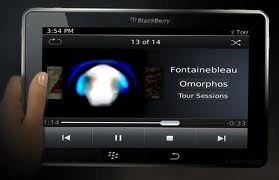
 But 2010 left a phenomenal mark with the launch of such revolutionary products as iPad (Apple), Black Pad (Blackberry), Eee Pad (Asus), Idea Pad (Lenovo), Palm Pad (HP), Galaxy Tab (Samsung) and several other GSM and wi-fi enabled touchscreen devices now popularly referred to as tablets. Unfortunately though, I have other more pressing priorities at this time than setting my eyes on any one of these.
No doubt, these gadgets are sure to change the way communicating and computing is done, just as technology is now changing the way societies and civilizations are interacting with each other across cultures, ages and races, regardless of time, distance and space.
 But the other part of reality could be is that these tablets are just another prelude to a more convenient future for the ‘haves’ while offering a bit complex one for the ‘have-nots’. One blogger who wrote about digital divide correctly puts it: “At a time when nearly everyone seems to be on the internet all the time, a few demographic groups appear to be permanently stuck in the digital dark ages.”
At the end of the day, the ultimate question is—how would these techy gadgets collectively be of use for the good of humanity?
Well, in the meantime, I need to take my other usual tablet– 500 mg paracetamol, for fever.
Twitter Explosion: Understanding the Power of the New Platform for Global Public Messaging
 “Follow me on Twitter.” For most of today’s generation especially those who are savvy about current popular social networking services, it’s easy to appreciate what this buzzy phrase is all about.
Twitter is the newest form of social networking and microblogging service that enables users to send and read other users’ brief or encapsulated messages and updates, called “tweets,” using computers or mobile devices with Internet access.
While it originally started mainly with text-based posts of up to 140 characters (20 characters less of mobile SMS messaging) shown on each user’s profile page, tweets have quickly evolved to now include shortened website resource locators that lead to message sources, mostly either blog or news sites.
By default, tweets are visible to anyone but privacy settings allow access modifications where senders can restrict message delivery only to their friends list. Those in the list who subscribe to the user’s tweets are called followers, and are doing the act of following on every user’s tweets.
Twitter started as an experiment in 2006 when Jack Dorsey, a 30 year-old American software architect from St. Louis, Missouri, thought of merging ‘away-message’ with the freedom and mobility of SMS messaging. An acclaimed outstanding innovator at such age, he would later be famously known as the creator of Twitter.
 By tapping the vast resources of real-time information network via Internet technology, Twitter draws its popularity from millions of people all over the world, many of whom post tweets as often as every second to let their ‘followers’ know what’s happening.
Most of the tweets today come in the form of random thoughts, expressions of emotions, state of mind, opinion, reactions, conversations, and some even personal rants. A significant chunk of messages, however, are more purposive like breaking news, announcement of important events as well as clever posts that wittingly or unwittingly bear advertising and marketing undertones.
Overall, Twitter’s timely bits of information that quickly spread across a global mass of people, general public, online friends and associates, as well as nations and civilizations, can help make better choices and decisions while creating the platform to influence on what’s being tweeted about around the world.
From the ordinary individual to the most powerful person on earth (like US President Barack Obama, whose rise to Presidency was also partly propelled by the power of social networking services such as Facebook and Twitter that helped generate campaign funds and volunteer support), Twitter in more ways than one, makes the powerful connection.
In 2007, barely a year following its launch in the U.S., Twitter had only about 400,000 tweets posted per quarter. Then in 2008, it pole-vaulted to 100 million tweets posted each quarter. By the end of 2009, it reached an incredible record of total 8 billion tweets posted. This year, it is projected to double to 16 billion tweets.
Leading technology experts are one in citing that Twitter has experienced an explosion in global traffic over the past year, establishing itself as one of the most-visited social networking sites across the universe, including the Philippines which ranked as 6th top Twitter user according to a study released recently, which showed Twitter penetration highest in Indonesia, followed by Brazil, Venezuela, Netherlands, and Japan.
As of the latest ranking by Twittercounter.com that tracks statistics of top 10 million Twitter users across all continents, the following emerged as the world’s top 5 Twitter users based on the number of followers (as of September 30, 2010):
1) Multi-awarded singer Lady Gaga (@ladygaga) with 6.5 million followers;
2) Britney Spears (@britneyspears) with 6 million;
3) Hollywood hunk Ashton Kutcher (@aplusk) with 5.8 million;
4) US President Barack Obama (@BarackObama) with 5.54 million; and,
5) Teen sensation Justin Bieber (@justinbieber) with 5.50 million followers.
With about 1 in every 3 human beings connects to the Internet, and with 3 in every 4 global Internet users access social networking sites regularly, Twitter becomes one of the most ubiquitous activities across the web, as more users around the world have become acquainted with connecting and expressing themselves through this social media.
Indeed, Twitter is the evolution of mobile communication. While it is not about to replace SMS, Instant Messaging, or email, it nevertheless brought forth a new public dimension to the rapidly escalating global messaging.
Follow me @yomontenegro on Twitter.
Oh’ baby it’s a wired world!
Technology has almost completely gotten into us already and the way it’s evolving at record pace, I wouldn’t be surprised if one day, no human being is unhooked to the net.
Here’s the latest amazing stats as of June 30, 2010, based on the Internet Usage and World Population Statistics put together by InternetWorldStats.com, based on data from the US Census Bureau, Nielsen Online, International Telecommunications Union and other reliable sources:
a) Current Estimated World Population: 6,845,609,960 (or roughly 6.8 billion)
b) Internet Users as of December 31, 2000: 360,985,492 (or some 361 million)
c) Internet Users as to Today: 1,966,524,816 (or about 2 billion)
d) Internet Growth 2000-2010: 444.8%
This simply means that almost 1 in every 3 human beings uses the most complex and intricate web ever known to the 21st century civilization—world wide web or the Internet.

Internet as another universe. (Photo courtesy of The Opte Project)
The astronomic growth of Internet indeed, triggered the dramatic rise of online communication exchanges and interaction worldwide, bringing far ends of the globe virtually together.
Separated by continents and different time zones, people from all walks of life who have access to the Internet, whether using PCs or mobile devices, communicate to each other real-time.
WordPress, Facebook, Twitter, YM, Friendster, and many more…Oh’ baby it really is a wild, wired world!
 Passing Thoughts