Archive
Mindanao is not Afghanistan
 There goes the unfair tagging again. Quite too often Mindanao is conveniently being made as benchmark for conflict, fear and danger by those who obviously have poor understanding of the island.
In a recent PDI story “P200,000 a month for a driver? Only in Afghanistan” which came out on 01/06/2011 page A4, a certain Carlo Echano of the so called Filipinos in Afghanistan (FIA) organization wanted the government to lift the ban on deployment of OFWs in Afghanistan, citing it’s much safer to be in the said country than “being in any of the slum areas in Manila or being in Mindanao.”
Mr. Echano’s juxtaposition of Afghanistan to stress that it’s safer than Mindanao is downright absurd and smacks of gross insensitivity to the people of Mindanao, majority of whom are no way nearer to the supposed danger Mr. Echano had wittingly or unwittingly implied.
The cause of OFWs in calling for concrete government action on the plight of Filipinos working abroad, particularly in widely recognized war-torn countries such as Afghanistan and Iraq is an endeavor worthy of support. But in a tactless effort to project his message, Mr. Echano’s statement in reference to Mindanao is grossly unfair and bereft of sense and compassion.
The era of tablets: Prelude to a wider digital divide?
 No one predicted its emergence decades ago but as we now see, these latest gadgets are about to become as ubiquitous as mobile phones over the next few years as more and more people are fast becoming tech savvy, internet addicts and social network slaves (wait a minute, is this me?).
My very first personal mobile phone way back in 1997 was an analog Nokia 501, with a famous shape that closely resembles that of a traditional ice shaver popularly used by households during the 80’s to tediously prepare a soothing halo-halo.
Next came the era of GSM phones with models that enabled the transmission of SMS in no more than 40 characters however, compared to the 160 characters capacity per sending of most latest phone models today.
 In 2000, when text messaging became very popular, I had my phone upgraded to the more fashionable and sleek at that time– the handy and trendy Nokia 5110 with changeable faceplates that come in different colors and designs.
By 2001 and 2002, Nokia had launched a flurry of slimmer and more compact mobile phone models with better features. And building on the revolutionary path of text messaging, Multimedia Messaging Service (MMS) took mobile communication to a new height.
With MMS-enabled mobile phones, people are able to send still images, video clips, text and audio messages over the air, especially with phones that have an integrated camera (who could forget the Nokia 7650, the world’s first phone with integrated camera designed for GSM networks).
Moving on to 2003, I had my first taste of a PDA (personal digital assistant) gadget with HP Jornada which allowed me to mostly send and receive work related emails with attachments, and remotely browse through the internet for news updates.
 Then in 2005, I upgraded to PDA integrated mobile phone, the once famous XDA, then the XDAIIs, which I still keep to this day and sometimes use as an alternate phone for other pre-paid numbers.
Fast forward to 2008, just as emails had become a regular part of my 24/7 life, I started to enjoy and appreciate the convenient features of a Blackberry phone (the very phone brand I then considered as “alien” since I was used to having Nokia and XDA models).
With its push email features, email messages get to my phone inbox real-time the way text messages do the moment they are sent to me. On top of that, I wouldn’t be needing a PC to browse the web, interact through Facebook and Twitter, and even post for my blog.
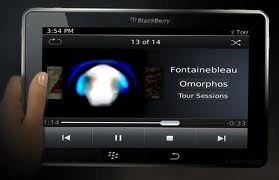
 But 2010 left a phenomenal mark with the launch of such revolutionary products as iPad (Apple), Black Pad (Blackberry), Eee Pad (Asus), Idea Pad (Lenovo), Palm Pad (HP), Galaxy Tab (Samsung) and several other GSM and wi-fi enabled touchscreen devices now popularly referred to as tablets. Unfortunately though, I have other more pressing priorities at this time than setting my eyes on any one of these.
No doubt, these gadgets are sure to change the way communicating and computing is done, just as technology is now changing the way societies and civilizations are interacting with each other across cultures, ages and races, regardless of time, distance and space.
 But the other part of reality could be is that these tablets are just another prelude to a more convenient future for the ‘haves’ while offering a bit complex one for the ‘have-nots’. One blogger who wrote about digital divide correctly puts it: “At a time when nearly everyone seems to be on the internet all the time, a few demographic groups appear to be permanently stuck in the digital dark ages.”
At the end of the day, the ultimate question is—how would these techy gadgets collectively be of use for the good of humanity?
Well, in the meantime, I need to take my other usual tablet– 500 mg paracetamol, for fever.

 Passing Thoughts